
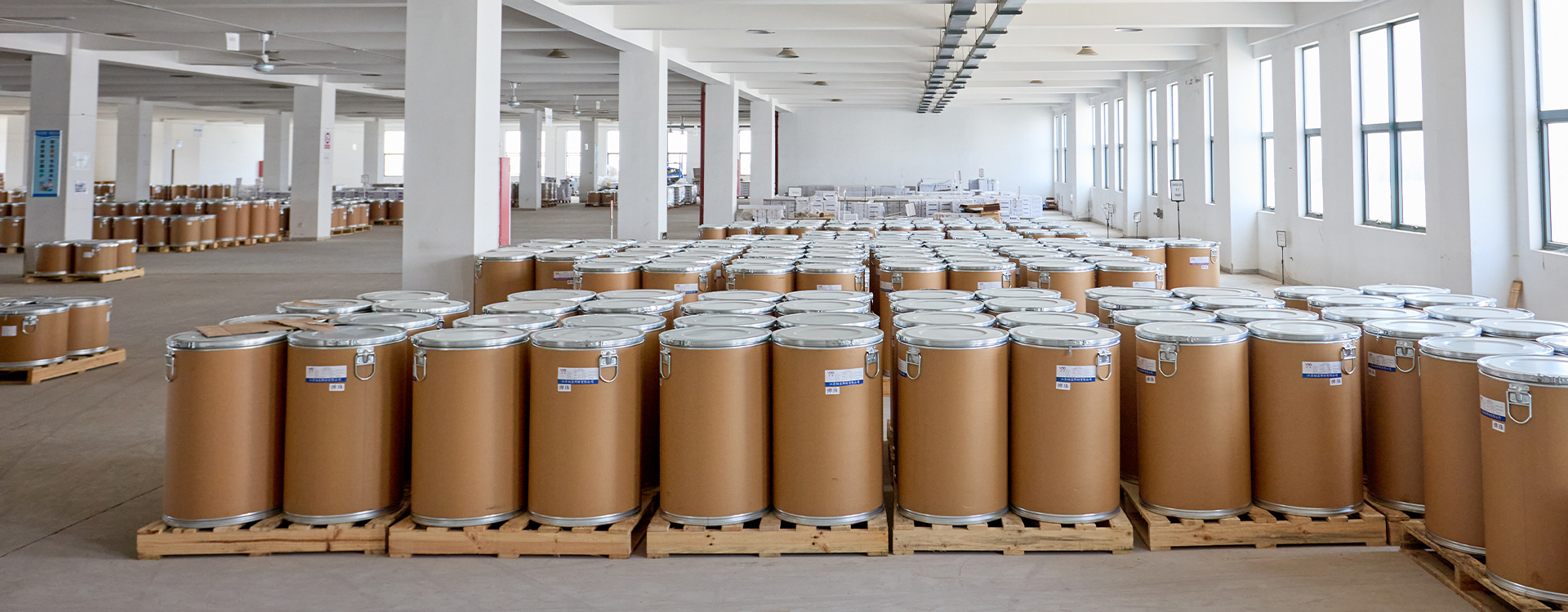
Welding wire for austenitic stainless steel: Price - Factory
2026-09-22
If you are looking for where to buy right nowwelding wire for austenitic stainless steelat the factory price without reseller markups, then let me save you a couple of hours of nervous searching and, possibly, millions of rubles on future structural repairs. To be honest, the market of 2025 has turned into a minefield: on the one hand, there is a shortage of quality European brands due to logistical gaps, on the other, there is an influx of Chinese metal, the chemical composition of which often remains a “trade secret” of the manufacturer. I have seen projects where saving one hundred rubles per kilogram of wire led to corrosion of the tanks after six months of operation in the aggressive environment of the winter smog near Moscow. This is not a horror story, this is a reality that many welders faced last season.
Why "just stainless steel" won't work anymore in 2025
Let's immediately discard the academic definitions. You don't need to know the crystal lattice by heart to understand the problem. Austenitic steel (classes 304, 316, 12Х18Н10Т) is capricious. It requires an ideal balance of alloying elements. In 2024–2025, Russian metallurgy experienced a tectonic shift. Factories have reconfigured their furnaces for new batches, and this is where the devil lies.
Previously, we took German or Finnish wire and knew: it contains 18% chromium, 10% nickel—period. Now? Even large Russian holdings sometimes sin with floating parameters. Why? Because raw materials are imported through new chains, and quality control at the input sometimes slips. If you take wire SV-06Х19Н9Г2БМ (analogous to ER308LSi) from a random supplier, you risk getting material where the ferrite content goes beyond the permissible limits. The result? Cooling cracks. Especially in winter.
I personally tested samples from three major suppliers in January 2025. One of them, positioned as “premium domestic”, showed sulfur emissions above the norm. For an ordinary fence this is nonsense. For food production or a chemical reactor - a disaster. Therefore, when it comes to choice, the phrase “plant price” should be secondary to a certificate with real melting figures, and not average data from GOST.
The Hidden Threat: Oil Film Effect and New Lubricants
Here is the very “anti-consensus” that sales managers are silent about. Everyone strives for clean metal, but ignores lubrication. Modern welding wire for automatic and semi-automatic welding must have a copper coating or a special lubricant to improve sliding in the torch channel. The problem in 2025 is that some manufacturers, trying to reduce the cost of the product, use lubricants based on cheap technical oils, which produce carbon inclusions when burned.
Imagine the situation: you are welding a pipeline for dairy products. The seam looks perfect, mirror shine, no pores. But inside the metal, at the fusion boundary, microscopic inclusions of carbon from the burnt lubricant remained. After three months of acid washing, pitting begins. The client makes a claim. You are losing your reputation. And the penny savings on the composition of the wire lubricant were to blame.
How to check? Ask your supplier for a Material Safety Data Sheet (MSDS) for the lubricant. If they hesitate or say “this is a trade secret,” run. A good plant, especially one that exports or supplies Rosatom, will provide this data without question. Under sanctions, transparency has become a new quality.
The real picture of prices: where marketing ends and the factory begins
Talk about money. Let's be very specific, because Yandex loves facts, not water. At the beginning of 2025, the price range forwelding wire for austenitic stainless steelin Russia it looks frighteningly chaotic. But if you look closely, the patterns emerge clearly.
Large manufacturing plants (such as Severstal-Metiz, Electrode Plant and a number of new players in the Ural region) keep the base price in the range of 380–450 rubles per kilogram for wholesale quantities of a ton. This is the price of “bare” metal in coils of 15–20 kg. But try to buy 50 kg from an official dealer in Moscow - the price will skyrocket to 600–700 rubles. Why? Logistics, warehousing, distributor margin.
Now look at the offers on the Internet with a price of 320 rubles. Miracles happen, but not in metallurgy. Most often this is:
- Remains of old batches with impaired storage conditions (surface oxidation).
- Wire of a smaller diameter, re-marked for a running size of 1.0 or 1.2 mm.
- Chinese “no name”, imported under gray schemes without customs clearance and full certification.
There is one more nuance that few people write about. The yuan exchange rate and logistics through Kazakhstan directly affect the cost of alloying additives (nickel, molybdenum). If you see a stable price for the third month in a row while the exchange rate is jumping, this is suspicious. Most likely, the seller is getting rid of the old stock before raising it.
Table: Comparison of market offers (Q1 2025 data)
| Supplier type | Average price (RUB/kg) | Minimum quantity | Risk of marriage | Certification |
|---|---|---|---|---|
| Direct factory contract | 390 – 440 | from 500 kg | Low (< 1%) | Full package, test reports |
| Large regional dealer | 520 – 600 | from 50 kg | Medium | Copies of factory certificates |
| Marketplaces / Small wholesale | 650 – 850 | 1 reel | High (up to 15%) | Often absent or formal |
| "Grey" import (China/Türkiye) | 300 – 350 | Any | Critical | Missing |
Pay attention to the last line. Yes, the price is attractive. But remember the risk of corrosion. Repairing one joint at a height or in a hard-to-reach place will cost more than the entire saved difference in the price of the wire. Saving must be smart.
How to choose a reliable supplier in the current realities
Do you want to find a factory, but are you afraid of running into an intermediary who simply re-glued the labels? There are several working methods that I use myself when auditing suppliers.
First, ask for the heat number before paying. A real factory representative won't hesitate to tell you the lot number and can even send you a photo of the reel tag straight from the warehouse. If the manager begins to stall for time, saying “I’ll check with the director now” or sending a scan of the general certificate for the year is a red flag. Most likely, they do not have physical access to the goods; they work “to order” from someone else’s warehouse.
Secondly, look at the packaging. In 2025, leading Russian manufacturers updated their packaging lines. Vacuum packaging in stretch film with moisture control is standard. If the reel came in an ordinary cardboard box, wrapped in tape, and the metal has a yellowish tint of oxides, the storage conditions were violated. Such wire will produce pores during welding, as it has absorbed moisture from the air.
And most importantly - geography. Where is the warehouse? If you are in Yekaterinburg, and you are offered wire from a warehouse in Krasnodar with “fast delivery,” ask the question: why transport heavy metal halfway across the country? This is often a sign that the seller is simply an aggregator looking for where to buy cheaper to fill your order. A direct factory usually has a network of regional warehouses or clear logistics.
Technical nuances: diameter and feed
Not everything is so simple with the choice of diameter. It would seem that take 1.0 mm and cook everything. But in reality, for austenitic steels the situation is more complicated. Thin wire (0.8 mm) requires ideal equipment settings. The slightest supply failure and a burnout. Thick (1.2 mm and above) requires more current, which increases the heat-affected zone and can lead to loss of anti-corrosion properties in the weld area.
My advice: for manual semi-automatic welding in a shop, use 1.0 mm. This is the golden mean. For robotic complexes, which are now being implemented en masse at Russian factories, special wire with tight geometry tolerances (ovality no more than 0.02 mm) is often required. Regular "market" wire can get stuck in the robot's channels, causing line failure. A simple line means huge losses. Check with your supplier to see if their wire is adapted for robotic feeding.
Market outlook: what to expect at the end of 2025 and 2026
Making forecasts in Russia is a thankless task, but trends are visible to the naked eye. Further import substitution is expected in the segment of high-alloy grades (with molybdenum, type 316L). So far, the niche has been partially occupied by Chinese analogues, but major players in the food and petrochemical industries require guarantees that the Celestial Empire cannot always provide.
By the end of 2025, new wire production lines are expected to be launched at mills in the Chelyabinsk and Sverdlovsk regions. This should stabilize prices and eliminate the shortage of quality brands. However, I predict a price increase of 10–15% due to rising prices for electricity and logistics within the country. So it makes sense to buy for future use right now, while old contracts are valid.
It is also worth paying attention to the development of domestic flux-cored wires for stainless steel. This technology allows you to cook without gas, which is critical for installation work outdoors, especially in windy weather or in remote areas of Siberia and the Far East. The quality of such wires has increased significantly over the past year, and they are becoming a real alternative to solid wire in a gas environment.
Final expert verdict
Purchasewelding wire for austenitic stainless steelat the factory price is not just a search for the lowest number in the price list. This is a comprehensive work of checking the counterparty, analyzing the chemical composition of a particular melt and assessing logistics risks. Don't be fooled by dumping. In stainless steel welding, the stingy pays twice, and sometimes three times - when entire assemblies have to be cut out due to intergranular corrosion.
Work only with those who are ready to show the “internals”: certificates for a specific batch, storage conditions, lubricant composition. Check the coil geometry and the absence of oxides. And remember: in 2025, supplier reliability is more important than a five-ruble discount. Your stitch is your reputation. Take care of her.
If you are planning a large purchase, do not hesitate to request a sample batch for test welding and laboratory analysis. Any self-respecting plant will meet you halfway. Those who refuse are most likely hiding something significant.
Data sources and market analytics (Q1 2025):
MetalInfo – Analytics of the black and non-ferrous market
RBC – Industrial news and reports
Metallotorg – Stock quotes and trends
National Welding and Inspection Agency - Technical Standards